$12.99
Heavy-duty cotton lifting straps — better grip on heavy pulls when grip becomes the limiting factor.
20 in stock
At some point in any serious training career, you run into the same problem on heavy pulls: your grip fails before your back does. You can pull more weight than your hands can hold onto, and the only thing standing between you and a heavier set is the slip in your fingers. Lifting straps solve that problem. Pristine Cotton Lifting Straps are the classic, no-frills, gets-it-done version of one of the most useful tools in serious training.
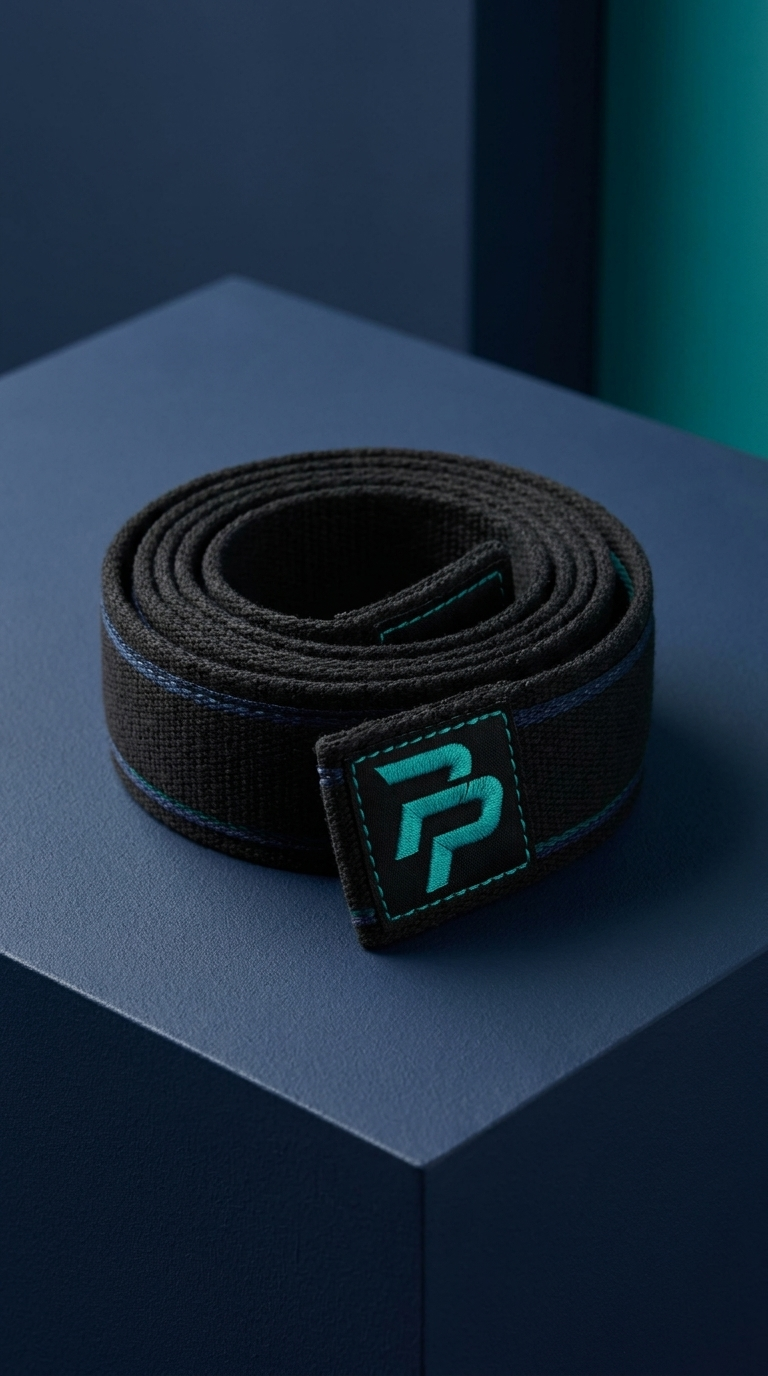
These are heavy-duty cotton lifting straps in the traditional lasso design. Each strap is a length of thick, woven cotton with a sewn loop at one end. You feed the long end through the loop, slip your hand through, and wrap the long end around the bar. When you grip the bar, your hand is supported by the strap rather than just by your finger grip — which means your back, hamstrings, and posterior chain can keep working through sets where your grip would have failed three reps earlier.
Cotton is the right material for general-purpose lifting straps. It has the right amount of friction against your skin to stay in place during sets, the right amount of grip against the bar to hold without slipping, and the right amount of comfort that you can wear them for high-rep sets without the straps cutting into your wrists. Leather straps (which we also sell) offer more durability and aggressive grip; cotton is the standard, the workhorse, the version that most lifters end up using most often.
The construction matters. These are made from multiple layers of thick woven cotton, with reinforced stitching at every stress point — particularly where the loop is sewn back to the main strap, which is the failure point on cheap straps. The straps are roughly 21 inches long, which is the right length for wrapping the bar three to four times for most exercises. Too short and the strap doesn’t get enough wraps to lock in; too long and you waste motion getting it set up between sets.
The use cases are mostly heavy pulls: deadlifts, rack pulls, rows (barbell, dumbbell, t-bar), shrugs, and pull-ups when you’re doing high reps and your grip would otherwise be the limiting factor. The general rule is to use straps on sets where the limit you’re trying to push is something other than grip strength — and to train grip separately if you want to improve it.
Some lifters argue against using straps because they “weaken your grip.” The reality is more nuanced: using straps on heavy pulls means you don’t train grip on those particular sets, but it also means you can put more stress on the actual target muscles. Most serious lifters use straps strategically — heavy work on big pulls, no straps on lighter work and grip-focused exercises — rather than treating it as a binary on-or-off decision.
The straps are sized for adults with typical hand and wrist proportions. They’re machine washable, though they break in nicely after a few sessions and most lifters don’t wash them frequently. The cotton softens over time and conforms to your wrists, which is part of why long-time users tend to prefer cotton over the stiffer leather option.
Simple tool, big impact on heavy pulls. Pair with chalk for the best grip on the bar itself, and you’ll find your back and hamstrings can keep pushing through sets that would otherwise have been limited by your fingers.
Heavy-duty woven cotton construction | Traditional lasso design — proven, reliable | Reinforced stitching at all stress points | 21 inches long — right size for most exercises | Comfortable enough for high-rep sets | Machine washable | Breaks in over time for a personalized fit
These statements have not been evaluated by the Food and Drug Administration. This product is not intended to diagnose, treat, cure, or prevent any disease. Individual results may vary. Consult a licensed healthcare provider before use, especially if you are pregnant, nursing, taking medication, or have a medical condition. Keep out of reach of children.